
 Send Inquiry
 08037735310
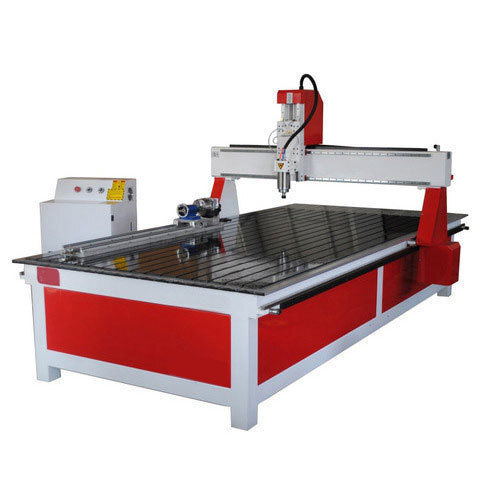
Automatic Cnc Wood Router Machine
Product Details:
- Surface Treatment Painted / Powder Coated
- Accessories Type Vacuum Table, Dust Collector, Tool Sensor
- Power Source Electric
- Automation Grade Automatic
- Technology CNC (Computer Numerical Control)
- Operating Pressure 0.6-0.8 MPa (for pneumatic devices)
- Control System DSP Control System (Optional: Mach3, NcStudio)
- Click to View more
X
Automatic Cnc Wood Router Machine Price And Quantity
- 1 Piece
Automatic Cnc Wood Router Machine Product Specifications
- Painted / Powder Coated
- Vacuum Table, Dust Collector, Tool Sensor
- Carving, Engraving, Cutting, Drilling, Milling on Wood
- Electric
- Automatic
- 220V/380V (customized based on request)
- Furniture Making, Cabinet Processing, Door Panel Engraving, Advertising Signs
- CNC (Computer Numerical Control)
- 0.6-0.8 MPa (for pneumatic devices)
- DSP Control System (Optional: Mach3, NcStudio)
- Automatic Wood Router
- 0.05 mm
- High Efficiency, Heavy Duty Structure, User-Friendly Interface, Stable Performance
- Steel Frame, Cast Iron Components
- CNC Wood Router
- Water Cooling / Air Cooling (depending on spindle)
- 3200 x 2100 x 1850 mm
- Manual / Automatic (ATC Optional)
- 1350 kg (approx.)
- Vacuum Suction / T-Slot
- 1300 x 2500 mm or custom sizes available
- G Code Compatible
- Blue & White (Standard)
- Max 25000 mm/min
- ArtCAM, Type3, Ucancam, Aspire, etc.
- Stepper / Servo Motor
- 0-24000 RPM
- Hiwin Square Linear Guide Rail
- 3 kW to 6 kW (customizable)
- <75 dB
- 12.7 mm
Automatic Cnc Wood Router Machine Trade Information
- mudara
- Cash Against Delivery (CAD), Cash on Delivery (COD)
- 100 Piece Per Day
- 1 Days
- Yes
- Free samples are available
- Asia, South America, Africa
- All India, South India, Central India, West India, North India, East India, Gujarat, Karnataka, Kerala, Lakshadweep, Mizoram, Meghalaya, Manipur, Andhra Pradesh, Bihar, Chandigarh, Daman and Diu, Goa, Jharkhand, Odisha, Punjab, Assam, Delhi, Dadra and Nagar Haveli, Andaman and Nicobar Islands, Arunachal Pradesh, Chhattisgarh, Haryana, Himachal Pradesh, Jammu and Kashmir, Madhya Pradesh, Maharashtra, Nagaland, Rajasthan, Sikkim
Product Description
An automatic CNC wood router machine is a computer-controlled cutting and carving tool used primarily for woodworking. "CNC" stands for Computer Numerical Control, meaning the machine's movements are precisely dictated by a computer program rather than manual operation. This high degree of automation makes it a cornerstone of modern manufacturing and a significant upgrade from traditional manual routing.
How it Works
The process of using a CNC wood router is a seamless integration of software and hardware:
-
Design Phase (CAD): The user creates a digital design of the desired object or pattern using Computer-Aided Design (CAD) software.
-
Toolpath Generation (CAM): The design file is then imported into Computer-Aided Manufacturing (CAM) software. This program translates the design into a set of machine-readable instructions, known as G-code. The G-code tells the machine's motors exactly how and where to move the cutting tool along the X, Y, and Z axes (and sometimes additional rotational axes) to remove material and create the final shape.
-
Execution: The G-code is sent to the CNC controller, the "brain" of the machine. The controller interprets the instructions and sends electrical signals to the machine's motors (typically stepper or servo motors), which drive the spindle and gantry, bringing the digital design to life.
Key Components
-
CNC Controller: The computer system that interprets the G-code and controls all machine functions.
-
Spindle: The high-speed motor that holds and rotates the cutting tool (router bit). Spindle speeds for woodworking typically range from 8,000 to 30,000 RPM.
-
Cutting Bed: The flat surface where the workpiece is secured for cutting. It can be a T-slot table (using clamps) or a vacuum table (using suction) for more efficient and secure hold-down.
-
Gantry: A bridge-like structure that moves along the length of the machine. The spindle is mounted on the gantry and moves with it to perform cuts.
-
Motors: Stepper or servo motors that drive the movement of the gantry and spindle along the X, Y, and Z axes. Servo motors, while more expensive, offer greater speed and precision.
-
Automatic Tool Changer (ATC): A key feature of more advanced automatic machines. It allows the machine to automatically switch between different router bits without manual intervention, saving time and enabling complex multi-tool projects.
Features and Capabilities
-
Axes: Most CNC wood routers are 3-axis machines (X, Y, Z), capable of cutting two-dimensional and 2.5-dimensional shapes, as well as 3D carvings. More advanced machines may have 4 or 5 axes, allowing for more complex, three-dimensional cuts and the ability to work on curved surfaces.
-
Materials: While primarily designed for wood, these machines can also work with a wide range of other materials, including plastics, acrylic, MDF, plywood, foam, composites, and even some soft metals like aluminum and brass.
-
Versatility: A single CNC router can perform the tasks of multiple traditional woodworking machines, such as a panel saw, a boring machine, and a spindle moulder.
-
Precision and Repeatability: The computer control ensures a high degree of accuracy and the ability to produce identical parts repeatedly, which is crucial for mass production.
High Precision & Versatility
Achieve flawless results in furniture components, cabinetry, and signage with our CNC wood router's exceptional 0.05 mm accuracy. Its powerful spindle, variable speeds, and wide compatibility with leading design software make it ideal for intricate patterns, deep cuts, and a variety of wood materials. Customizable power and working area adapt this machine to specific production needs.
Innovative Drive & Table Design
Select between stepper and servo-driven systems for optimal motion control, while the Hiwin square linear guide rails ensure smooth, stable movement. Whether you opt for the vacuum suction table or robust T-slot configuration, the platform provides secure workpiece mounting, enhancing efficiency for production runs or one-off projects.
User-Friendly Automation & Durable Build
Enjoy seamless automated routing with intuitive DSP controls or software such as Mach3 and NcStudio. The heavy-duty steel frame, powder-coated surfaces, and reliable cooling options guarantee long-term, stable operation, while safety features and low noise levels (<75 dB) contribute to a comfortable working environment.
FAQ's of Automatic Cnc Wood Router Machine:
Q: How does the automatic CNC wood router machine improve woodworking efficiency?
A: The machine automates carving, cutting, engraving, drilling, and milling using precision CNC control, speeding up production and reducing human error. Its powerful spindle and automation (including optional ATC) allow for continuous operation and complex task execution, significantly increasing output.Q: What types of wood and applications is this router suited for?
A: Designed for a range of wood types, the CNC router excels at furniture manufacturing, cabinet processing, door panel engraving, and production of advertising signs. Its sturdy construction and high-precision functionality make it suitable for both large-scale and detailed woodworking tasks.Q: When should I choose the ATC (Automatic Tool Changer) option?
A: The ATC is recommended for users who perform frequent tool changes during complex jobs, such as multi-step carvings or intricate inlays. Automatic tool changing saves substantial setup time, reduces labor, and enhances productivity for high-volume or multi-process tasks.Q: Where is this CNC wood router typically installed?
A: This machine is commonly used in industrial workshops, furniture factories, cabinet shops, signage manufacturing units, and woodworking training centers. Its robust design and customizable options make it suitable for commercial and educational environments.Q: What is the process for setting up and operating the router?
A: Installation involves securing the machine, connecting to the required electric power (220V/380V as specified), configuring pneumatic lines if needed, and loading compatible design files via supported software. The user-friendly interface allows operators to input G-codes, select tools, and start automated machining operations with ease.Q: How easy is it to use software with this CNC wood router?
A: The machine is compatible with widely used software like ArtCAM, Type3, Ucancam, and Aspire, providing flexibility for designers and operators. Users can import designs, generate toolpaths, and manage operations efficiently, even with minimal CNC experience.Q: What benefits does the heavy-duty construction offer?
A: A steel frame and cast iron components provide stability and reduce vibrations during operation, resulting in greater accuracy, extended service life, and safer working conditions. The powder-coated or painted finish offers resistance to wear and corrosion, ensuring the machine maintains its performance in demanding workshop environments.Tell us about your requirement

Price:
Quantity
Select Unit
- 50
- 100
- 200
- 250
- 500
- 1000+
Additional detail
Mobile number
Email

Other Products in 'Surface grinder' category

Contact Details

- Plot No 2, Puspa Industrial Estate, Bakrol To Gatrad Road, Bakrol-Bujrang Road,Ahmedabad - 382430, Gujarat, India
- Phone : 08037735310
LAXMI ENGINEERING WORKS
GST : 24AQQPP0759H1ZH

- Mr Mehul Patel (Proprietor)
- Mobile : 08037735310
- laxmiengineeringworks2002@gmail.com
|


 Send Inquiry
 Send SMS
LAXMI ENGINEERING WORKS
All Rights Reserved.(Terms of Use)
Developed and Managed by Infocom Network Private Limited.
Developed and Managed by Infocom Network Private Limited.

